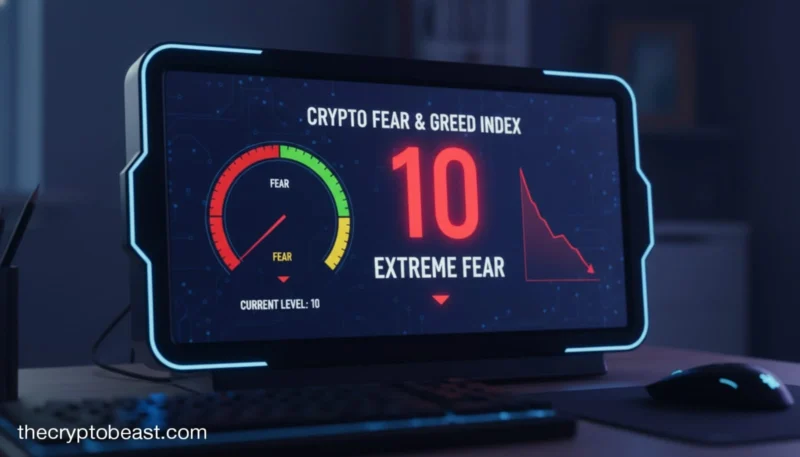
The Crypto Fear and Greed Index has plunged to 10, firmly in the “Extreme Fear” zone. For many traders, this is a red alert; for patient investors, it may be the kind of signal they wait months to see.
Under the hood, the index blends several quantitative and qualitative inputs rather than relying on a single metric. It tracks price momentum of the top cryptocurrencies (excluding stablecoins), volatility expectations, derivatives positioning, market structure, and proprietary sentiment data such as search trends and user engagement. The result is a composite view of how scared or greedy the market really is at any given moment.
How Extreme Fear Develops?
Extreme fear typically does not appear out of nowhere. It often follows a sequence of events: sharp price declines, elevated volatility, liquidations in derivatives markets, and a steady shift in narrative from optimism to doubt. The index captures this by incorporating implied volatility indices for Bitcoin and Ethereum, which reflect expectations of price swings over the next 30 days. Elevated put–call ratios in options markets further confirm that traders are paying up for downside protection, a classic sign of defensive positioning.
Why Extreme Fear Can Be a Contrarian Signal?
Traders often treat “Extreme Fear” not as a warning of impending doom, but as a high-probability reversal signal. From a behavioral finance perspective, this contrarian approach is rooted in several key psychological and structural mechanics:
- Indicator of Price Distortion: Extreme fear typically drives assets below their intrinsic value. When sentiment hits a localized low, the market is often reacting to emotion rather than fundamental data, creating “bargains” for disciplined investors.
- The “Capitulation” Event: Fear readings often peak during a capitulation, where the final “weak hands” (uncommitted traders) sell out. Once this forced selling is exhausted, the downward pressure vanishes, leaving only buyers remaining in the market.
- Forced Selling vs. Voluntary Selling: During periods of high fear, many participants are forced to sell due to margin calls or liquidations. This non-discretionary selling often occurs at the absolute bottom of a move, providing the liquidity needed for institutional “smart money” to enter.
- Sentiment Exhaustion: Markets move based on the “surprised” participant. When everyone is already “extremely fearful” and has already sold, there is no one left to drive the price lower. In this state, even neutral news can cause a massive rally because the bearish thesis has been “priced in.”
- Historical Turning Points: Major market recoveries—such as the March 2020 COVID-19 crash or the 2008 Financial Crisis—coincided with record-low sentiment readings. While the news headlines were at their worst, the Fear and Greed Index was at its most accurate as a buy signal.
- A Filter for “Noise”: Extreme readings help analysts filter out daily market noise. Instead of following the 24-hour news cycle, a researcher looks at the index to see if the crowd has reached a psychological extreme that is statistically likely to mean-revert.
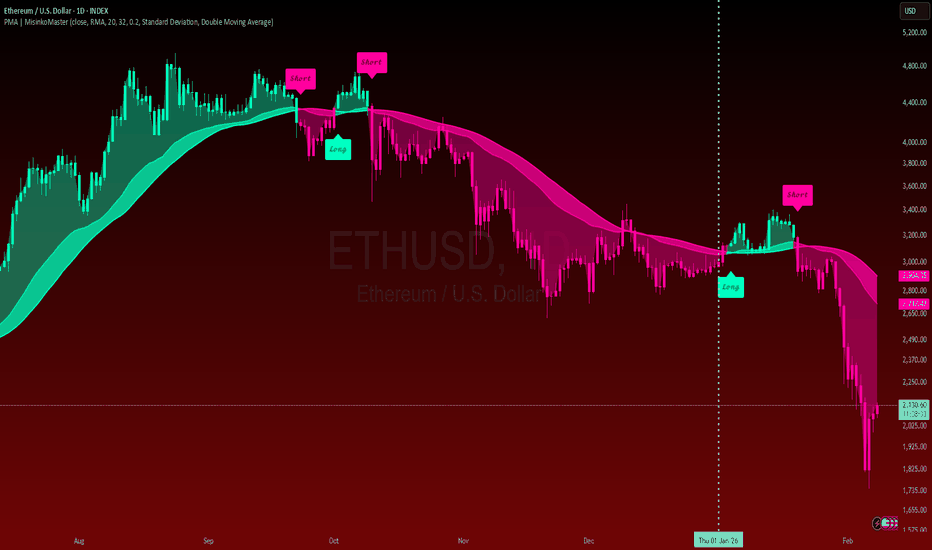
Disclaimer: This article provides information only, not financial advice. Crypto markets are volatile; past events like 2026 liquidations don’t guarantee future results. Do your own research and consult advisors. No liability for losses.